
AI Campaign Cost Breakdown: Understanding the Financials of Hybrid AI Campaign Production

Updated: Aug 29
In the evolving landscape of fashion, luxury, and premium brand advertising, hybrid AI campaign production has emerged as a strategic approach to visual campaign creation. Combining real talent, authentic products, and AI-generated imagery, this method offers enhanced flexibility, speed, and creative control. However, understanding the financial implications of such campaigns is essential for decision-makers and brand teams aiming to optimize budgets without compromising quality. This article provides a detailed breakdown of AI campaign costs, focusing on the specific factors influencing expenses in hybrid AI campaign production for high-end advertising visuals.
AI Campaign Cost Breakdown: Key Components and Influencing Factors
Hybrid AI campaign production integrates traditional production elements with AI-generated content, creating a complex cost structure. The primary cost components include:
Creative Direction and Concept Development: This phase involves experienced creative professionals who design the campaign’s visual narrative, ensuring alignment with brand identity and market positioning. The expertise required here reflects decades of industry knowledge, particularly in fashion and luxury sectors.
Photography and Real Talent Costs: Despite AI’s role, real models, stylists, and photographers remain integral. Their fees depend on experience, location, and the scale of the shoot.
AI-Generated Campaign Imagery: Costs here relate to the technology used, including software licenses, computational resources, and specialist AI artists or technicians who refine outputs to meet brand standards.
Post-Production and Visual Consistency: Hybrid campaigns require meticulous editing to blend AI-generated elements with real photography seamlessly. This stage demands skilled retouchers and colorists.
Project Management and Production Oversight: Coordinating hybrid workflows involves additional management layers to maintain timelines, quality, and brand compliance.
Each of these components contributes to the overall budget, with variability depending on campaign complexity, scale, and desired output quality.
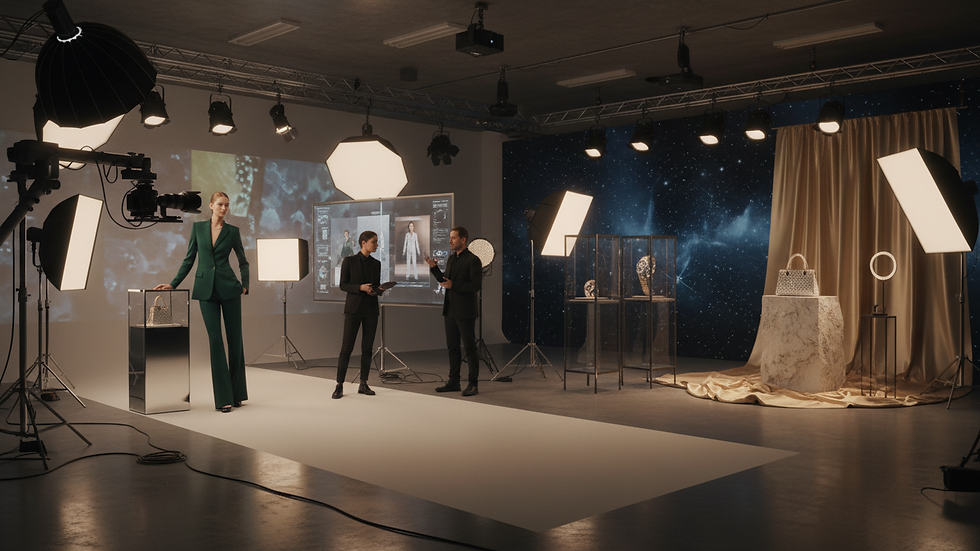
Cost Drivers in Hybrid AI Campaign Production
Several factors influence the final cost of AI advertising production, particularly in the context of fashion and premium brands:
1. Scale and Scope of the Campaign
Larger campaigns with multiple visuals, locations, and product lines naturally incur higher costs. Hybrid production allows for scalability, but each additional asset requires proportional investment in both real and AI-generated elements.
2. Level of Creative Control and Customization
Brands demanding precise creative direction and bespoke AI imagery will face higher costs. The Bridges emphasizes maintaining creative control and brand sensitivity, which involves iterative refinement and expert oversight.
3. Technology and Expertise
The sophistication of AI tools and the expertise of the production team directly impact expenses. Advanced AI models capable of generating high-fidelity imagery require significant computational power and specialist knowledge.
4. Integration Complexity
Seamlessly combining real photography with AI-generated visuals demands advanced post-production techniques. The complexity of this integration affects both time and cost.
5. Timeframe and Production Speed
Accelerated timelines may increase costs due to the need for additional resources or expedited workflows. Hybrid AI campaign production offers speed advantages but balancing this with quality requires careful planning.
Practical Examples of AI Campaign Cost Structures
To illustrate, consider two hypothetical scenarios:
Scenario A: Mid-Scale Fashion Campaign
Creative direction and concept: $15,000
Photography and talent: $40,000
AI-generated imagery: $20,000
Post-production: $15,000
Project management: $10,000
Total estimated cost: $100,000
Scenario B: Large-Scale Luxury Brand Campaign
Creative direction and concept: $30,000
Photography and talent: $80,000
AI-generated imagery: $50,000
Post-production: $40,000
Project management: $20,000
Total estimated cost: $220,000
These examples demonstrate how costs scale with campaign ambition and complexity. Hybrid AI campaign production enables premium brands to optimize these investments by leveraging AI’s scalability while preserving creative integrity.

Strategic Recommendations for Budgeting Hybrid AI Campaigns
To maximize value and control costs, brands and agencies should consider the following:
Define Clear Creative Objectives: Establishing precise goals reduces unnecessary iterations and streamlines production.
Leverage Hybrid Strengths: Use AI-generated imagery to complement, not replace, real talent and products, ensuring authenticity and brand alignment.
Invest in Experienced Production Partners: Collaborate with teams that understand both AI technology and fashion campaign production nuances.
Plan for Post-Production Complexity: Allocate sufficient resources for seamless integration of AI and real visuals.
Monitor and Adjust Budgets Dynamically: Hybrid workflows allow flexibility; adapt spending based on ongoing production insights.
For those exploring the financial aspects, understanding how much do ai campaigns cost provides valuable context for informed decision-making.
The Role of Hybrid AI Campaign Production in Modern Visual Campaigns
The Bridges focuses on hybrid AI campaign production for fashion and premium brands, positioning AI as a professional production tool rather than a trend. This approach combines the strengths of human creativity and AI efficiency, delivering advertising visuals that meet the highest standards of quality and brand consistency.
Hybrid campaign production offers:
Enhanced Flexibility: Rapid iteration and adaptation to creative direction changes.
Scalability: Efficient production of multiple assets across markets and platforms.
Creative Control: Maintaining brand sensitivity through expert oversight.
Production Efficiency: Streamlined workflows reduce time and resource expenditure.
These advantages make hybrid AI campaign production a strategic choice for brands seeking to innovate while preserving the premium nature of their advertising.
Final Insights on AI Campaign Cost Management
Understanding the cost structure of hybrid AI campaign production is essential for effective budget allocation and campaign success. By dissecting the components and recognizing key cost drivers, decision-makers can better navigate the complexities of AI advertising production.
The Bridges’ expertise in this domain ensures that campaigns are executed with precision, creative excellence, and commercial relevance. This approach empowers fashion, luxury, and premium brands to harness AI’s potential responsibly and strategically, achieving superior advertising visuals with controlled investment.
In summary, hybrid AI campaign production represents a sophisticated evolution in visual campaign production, balancing innovation with tradition to meet the demands of modern brand communication.
Read a hybrid campaign budget as three columns: what is photographed once, what is generated many times, and what is licensed for a period.
Frequently Asked Questions
What does a full hybrid campaign budget look like?
A worked budget has four blocks: concept and art direction, the photography day with talent and products, AI post-production and asset generation, and project management. The photography block is largely fixed; the generation block scales with how many assets are required.
Which block is usually the largest?
Concept photography and talent, because that is where people, studio time and products come together on a fixed date. Generation costs grow with volume but from a much lower base per asset.
How much does project management add?
More than most first budgets allow for. A hybrid production coordinates a shoot, a generation pipeline and an approval process at once, and that coordination is real work rather than overhead.
Can a budget be estimated before the concept exists?
Only as a range. Asset count, format count and market count are the variables that move the total, and none of them is knowable before the concept is agreed. A range plus a defined scope is more useful than a precise number based on assumptions.
What makes a cost estimate go wrong?
Unbounded scope. If the number of markets, formats or revision rounds is left open, the generation block expands without limit. Fixing the scope is what makes the estimate hold.
About The Bridges AI
The Bridges AI is an independent AI and hybrid campaign production company working in strategic partnership with Most Wanted Models®, the German model agency founded in 1997 and a member of VELMA. Combining nearly 30 years of fashion, talent and campaign expertise with generative AI, The Bridges AI produces high-end imagery and video for fashion, beauty and premium brands worldwide.


Comments